ACROPATH LinkedIn page
Follow the project on LinkedIn for further updates and related project activities.

Results 1 to 10 of 18
Follow the project on LinkedIn for further updates and related project activities.
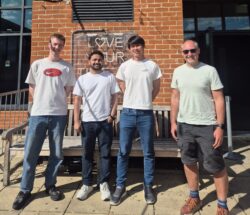 Dr Shota Nishikawa of RIKEN recently visited the University of Leeds as part of the ACROPATH international secondment programme.
Working with Professor Paul Beales, Professor Michael Webb and colleagues, the visit focussed on integrating cell-free molecular sensing and gene expression systems with membrane-based compartments. The secondment brought together expertise in synthetic biology and membrane biophysics, supporting knowledge exchange and the development of new collaborative research opportunities.
The visit highlights the important role of international secondments within ACROPATH, helping researchers build connections, share expertise and develop innovative approaches to scientific challenges.
The ACROPATH team looks forward to building on the research initiated during the visit and to further strengthening collaboration between researchers in the UK and Japan.
 As part of ACROPATH, Dr Yusei Sato from JAMSTEC visited the University of Leeds to collaborate on engineering biology and artificial cell technologies. During his secondment, he worked with Leeds researchers to develop and assess hybrid artificial cell systems, focusing on improving their preparation, stability and biological functionality. The visit facilitated valuable knowledge exchange between UK and Japanese teams, strengthened the partnership between Leeds and JAMSTEC, and supported ACROPATH's long-term goal of creating artificial cells that can sense and respond to environmental changes.
Dr Sato also engaged with the wider research community through seminars, collaborative discussions and public engagement activities, including the University of Leeds' annual Be Curious festival.
Paul Beales and Mike Webb from the University of Leeds recently visited ACROPATH project partners and collaborators in Japan to review progress and coordinate the next phase of the UK-Japan research programme.
The visit included meetings at JAMSTEC, RIKEN and the Institute of Science Tokyo, where discussions focused on synthetic cell technologies, bioinformatics approaches for enzyme discovery, and the development of cell-free gene expression systems for pathogen detection.
ACROPATH is developing engineered artificial cells capable of detecting pathogenic bacteria and clinically important biomarkers, including indicators of antimicrobial resistance. The meetings provided an opportunity to align research activities across the consortium, explore opportunities for wider collaboration, and advance the integration of key technologies underpinning the project's artificial diagnostic cell platform.
By combining expertise in protein engineering, synthetic membranes, cell-free biology and genetic circuit design, the consortium is working towards rapid and robust diagnostic technologies for future infectious disease detection and monitoring.
Members of the ACROPATH team recently presented their research to the Fighting Infections Group as part of the project's Patient and Public Involvement and Engagement (PPIE) activities.
The group brings together individuals with a wide range of expertise and experiences relating to infectious diseases and clinical diagnostics. During the session, Calum MacRae, Kerrie Davies and Paul Beales introduced the ACROPATH project and gathered valuable feedback on diagnostic testing and the team's ongoing research.
This engagement will help inform the long-term development of the project and support consideration of its future clinical applications. The ACROPATH team looks forward to continuing its discussions with the Fighting Infections Group and sharing future project developments.

Members of the ACROPATH team recently took part in the University of Leeds’ Be Curious event, a family-friendly day showcasing research through interactive activities.
The team led a hands-on activity where families built artificial cells and explored their use as diagnostic sensors, introducing key concepts behind ACROPATH’s work in an engaging way.
The event also provided valuable opportunities to speak with the public, offering insights into experiences and challenges in medical diagnostics. These interactions help inform the development of ACROPATH technologies and highlight areas where new diagnostic approaches could make a difference.
Members of the ACROPATH team have recently taken part in conferences across the UK, presenting their work and engaging with the wider research community. These events provided valuable opportunities for discussion and collaboration, helping position ACROPATH at the forefront of advances in artificial cell technologies.
At the Astbury Conversation 2026: Designing Biology in Leeds, Prof Michael Webb delivered a talk on harnessing transpeptidases to engineer biomolecule function, alongside poster presentations from the team. Later that week, researchers attended SynCell 2026 in London. Prof Paul Beales and Dr Yutetsu Kuruma presented work on artificial cells and targeted liposome production, with additional posters from Dr Shivendra Singh and Dr Yusei Sato.
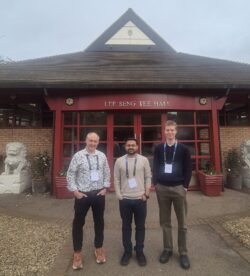 On 26-27 March, ACROPATH researchers Paul Beales, Shivendra Singh and Calum MacRae attended the Designer Membranes and Bio‑Inspired Interfaces meeting at Wolfson College, Cambridge. Paul delivered an invited talk on engineering durable hybrid membrane interfaces for biotechnology and artificial cell applications. The meeting offered valuable opportunities to engage with the wider research community and sparked new ideas to support the advancing development of the ACROPATH biosensors.
 Lawrence has recently returned from a secondment at the Kuruma Lab, JAMSTEC, where he contributed to ACROPATH’s work on artificial cells for rapid bacterial diagnostics.
During his visit he also attended the Cell‑Free Conference in Matsuyama, connecting with researchers advancing bottom‑up biology from around the world.
The exchange strengthened scientific links between the UK and Japan and will continue to shape ACROPATH research going forward.
 Lawrence recently began his secondment at JAMSTEC in Yokohama, advancing his peptide development work alongside the cell‑free and artificial‑cell research led by Shivendra and Yusei. Shivendra has now completed his own successful secondment, contributing new membrane–microfluidic integration methods.
During their handover, the team toured the JAMSTEC research vessel MIRAI – a rare chance to see onboard laboratory facilities designed for challenging environments such as the Arctic Circle. A big thank you to Yutetsu and Yusei for arranging the visit.
These exchanges continue to strengthen ACROPATH collaboration and drive forward our shared scientific goals.